

Why Buyers Make Offers in 8 Seconds
Updated: Jan 31
Why Buyers Make Offers in 8 Seconds (And How Staging Wins That Race)
A buyer walks into your property. They have 8 seconds.

Within those 8 seconds, their brain makes subconscious decisions about whether this could be home. Not logical decisions. Subconscious emotional ones.
This isn't marketing hyperbole. This is neuroscience.
Why buyers make offers in 8 seconds is more than a catchy phrase - it’s the foundation of effective property staging. Professional staging works because it understands exactly what happens in those first 8 seconds and optimises every detail for it. Grasping buyer psychology at this level is the difference between properties that sell quickly and those that sit on the market for months.
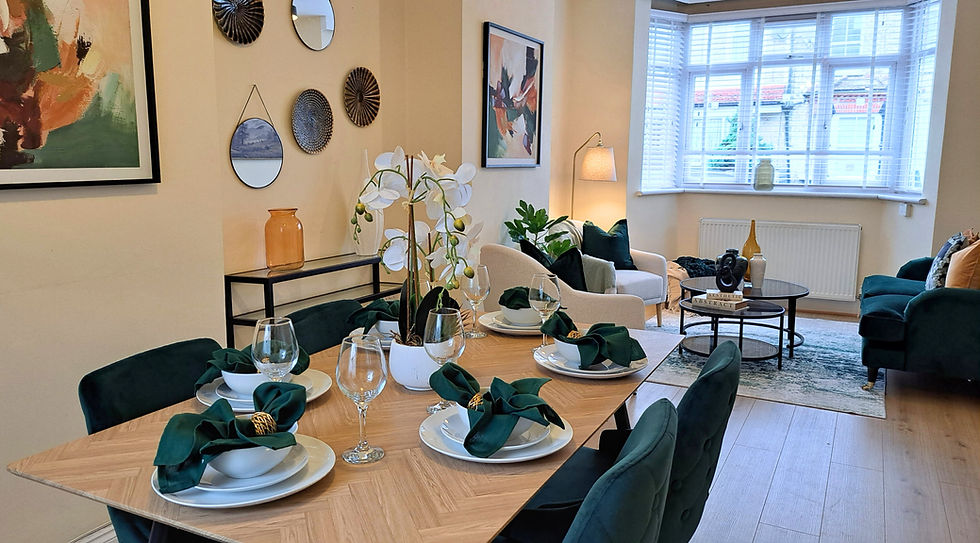
This is how Peak Property Staging approaches every home: not by simply making spaces beautiful, but by applying first-impression neuroscience and designing the property experience to capture buyers’ attention from the very first moment.
The 8-Second Brain: Neuroscience of First Impressions
Neuroscience research shows that the human brain processes initial impressions in approximately 100-300 milliseconds. By the 8-second mark, a buyer has formed conclusions about:
Maintenance and condition – Is this property well-maintained?
Livability – Can I actually live here as-is?
Investment safety – Is this a safe choice?
Emotional connection – Do I feel something here?
These aren't conscious thoughts. They're brain responses happening before conscious analysis even starts.
Why 8 Seconds Matters for First Impression
The 8-second window matters because it's the transition between unconscious first impression and conscious evaluation.
By 8 seconds, a buyer's emotional reaction is locked in. The rest of the viewing is their brain seeking confirmation of that initial gut feeling, not making a fresh decision.
This means:
If the first 8 seconds create a positive gut response, the buyer explores the rest of the property looking for reasons to like it more. They mentally arrange furniture. They imagine dinner parties.
If the first 8 seconds create a negative gut response, the buyer explores looking for problems to confirm their initial reaction. They notice small defects. They imagine all the work needed.
Same property. Completely different interpretation based on first impression psychology.
The Amygdala and Threat Assessment
Here's the science layer: Your amygdala, the brain's threat-detection center processes first impression information before your prefrontal cortex (logic brain) gets involved.
Cluttered spaces, dark rooms, disorganised environments trigger amygdala threat responses: "Caution. Something's off here."
Clean, bright, organised spaces trigger amygdala safety responses: "This is safe. This is well-maintained."
Professional staging doesn't change the property. It changes the amygdala's first response from "caution" to "safe."
What Buyers Evaluate in Those Critical 8 Seconds
During the first impression window, buyers' brains are answering specific questions. Understanding these answers shapes how you stage.
Question 1: Is This Well-Maintained?
The buyer's brain scans for signals of maintenance:
Cleanliness (obvious)
Organisation (signals intentional maintenance)
Lack of visible defects (no water stains, no cracks, no damaged paint)
Current décor (nothing obviously outdated screams "neglected")
A cluttered property reads as "poor maintenance" even if it's technically sound. An organised, clean property reads as "well-maintained" even if some systems need updating.
Staging optimisation: Remove clutter entirely. Fresh paint on walls. Clear surfaces. No visible damage or wear.
Question 2: Can I Actually Use This Space?
The buyer's brain assesses functional livability:
Can I see the actual room layout? (Or is it hidden by furniture/clutter?)
Is this space big enough? (Perceived size = cleared sight lines + light)
Does this make sense for how I live? (Kitchen layout, bedroom functionality, living room flow)
Overcrowded, darkly furnished properties feel small and unusable. Clear, light, properly arranged properties feel spacious and functional.
Staging optimisation: Maximise perceived space through furniture removal and light. Arrange furniture to show actual layout. Clear sightlines throughout.
Question 3: Is This a Safe Choice?

Buyers are making significant financial commitments. Their amygdala checks: "Is there hidden danger here?"
Safety signals include:
No signs of problems (water stains, cracks, mold indicators)
Professional appearance (signals owner care)
Logical layout (suggests no hidden structural issues)
Light and visibility (darkness = hidden problems in ancient brain logic)
A dark, cluttered property with visible wear reads as potentially problematic, even if it's fine.
Staging optimisation: Maximum light. Remove anything showing wear. Professional presentation throughout.
Question 4: Do I Feel Something Here?
This is the emotional layer. Does the space create positive feeling?
Positive emotional triggers during first impression:
Light and openness (feel good neurochemicals)
Order and cleanliness (sense of control and safety)
Welcoming feeling (sense of belonging)
Space and breathing room (physical comfort)
Negative emotional triggers:
Darkness or dim lighting (anxiety)
Clutter and chaos (overwhelm)
Personal items everywhere (sense of trespassing)
Cramped feeling (discomfort)
Professional staging curates these emotional triggers intentionally.
The Rightmove/Zoopla First-Look Psychology

Before buyers even see your property in person, they see it online.
Most buyers now spend 8-15 seconds reviewing property photos on Rightmove or Zoopla before deciding whether to book a viewing. This means your first impression begins before the property tour.
Online First Impression (Photos)
The first photo is make-or-break. Buyers decide:
Is this worth viewing? (In 1-3 seconds, before reading description)
Does this photograph well? (Professional presentation signals real value)
Staged properties photograph dramatically better than unstaged. Professional lighting, clear sightlines, clean backgrounds, staged focal points—all show up in photos.
In-Person First Impression (Entry)
The buyer pulls up, walks to the door, enters. Those 8 seconds begin.
Most buyer decisions about viewing walk-through length are made in the entry/hallway:
Did I see what I expected from the photos? (Cognitive consistency)
Does this feel like the property matched the listing? (Trust in seller)
Am I interested in seeing more? (Emotional first impression)
Staged properties maintain consistency between photos and in-person, building buyer trust.
How Professional Staging Captures the 8-Second Window
Professional staging doesn't work by being beautiful. It works by understanding first impression neuroscience and optimising for it.
Staging Principle 1: Remove Competing Narratives
When a buyer enters a cluttered, lived-in property, their brain is processing multiple competing narratives:
The property's actual features
The previous owner's style and choices
The chaos and clutter
This cognitive load uses up brain resources, triggering fatigue and negative feelings.
Professional staging removes competing narratives. The space says one thing: "This is a well-maintained property ready for you."
Staging action: Remove personal items, excessive furniture, visible clutter. Create visual silence.
Staging Principle 2: Maximise Light and Openness
Light is one of the most powerful triggers for positive neuroscience response.
Natural light signals health, safety, and openness. Dark rooms trigger caution responses, even if they're actually fine.
Professional staging maximises every light source:
Clean windows (lets maximum light through)
Remove heavy curtains/blinds
Add task lighting (table lamps, accent lighting)
Use mirrors to reflect and multiply light
Paint dark walls lighter colors
A dark room that becomes light reads as "larger and better maintained" through the same square footage.
Staging Principle 3: Create Clear Sightlines
Cluttered spaces feel small and overwhelming. Clear sightlines feel spacious and controllable.
Professional staging removes furniture and items that break sight lines, allowing the buyer's brain to perceive true room size.
Staging action: Remove excess furniture. Arrange remaining pieces to maintain sight line from doorway through room. Eliminate visual clutter on surfaces.
Staging Principle 4: Establish Functional Layout Clarity
Buyers' brains need to understand how to use each space.
A bedroom should function as a bedroom (bed as focal point, clear floor space).
A living room should function as a gathering space (seating arranged for conversation, media/focal point clear).
When layouts are ambiguous or cluttered, buyers' brains get confused: "What is this space for? Can I use it?"
Professional staging clarifies: "This is a functional bedroom." "This is a comfortable living space."
Staging action: Arrange one piece of key furniture as clear focal point. Arrange other pieces to support that function. Remove items that confuse purpose.
Staging Principle 5: Eliminate Personal Claims
When a buyer sees family photos, personalised décor, and personal items, their amygdala registers: "This is someone else's home. I'm trespassing."
This isn't conscious. It's neurological. Personal items create psychological distance from the space.
Professional staging removes these triggers, allowing buyers to project themselves into the space.
Staging action: Remove all family photos. Remove religious or personal décor. Remove children's artwork or personal collections. Create neutral canvas.
Staging Mistakes That Lose Buyers in 8 Seconds
Understanding first impression psychology reveals why certain staging approaches fail.
Mistake 1: Over-Staging
Over-staged properties look like show homes. Buyers feel they can't touch anything. They get anxious about maintaining perfection.
The 8-second response: "This is beautiful but not for me."
Professional staging is clean and organized, not magazine-perfect. The space should feel liveable, not untouchable.
Mistake 2: Styling Over Functionality
Some staging focuses on aesthetic styling rather than functional clarity.
A living room staged with expensive designer furniture and artistic arrangements looks nice but confuses the functional purpose.
The 8-second response: "Pretty, but how would I actually use this?"
Professional staging prioritises functional clarity with styling that supports it.
Mistake 3: Colour and Décor Choices That Date the Property
If your staging uses trendy colours, trendy furniture, or trendy décor, the property reads as dated within 2-3 years.
The 8-second response: "This is styled for 2022. It'll look dated by 2025."
Professional staging uses timeless colours (whites, grays, warm neutrals) and classic furniture that won't feel dated in 5 years.
Mistake 4: Insufficient Lighting
Dark properties lose in the first impression window regardless of other factors.
The 8-second response: "This feels gloomy. Next property."
Professional staging maximises all light sources. If the property is naturally dark, staging compensates with task lighting.
Mistake 5: Unclear Functional Layout
When furniture arrangement doesn't clearly show room purpose, buyers get confused.
The 8-second response: "What is this space supposed to be?"
Professional staging makes function obvious. One clear focal point. Supporting arrangement. Purpose unmistakable.
The First Impression Psychology of Different Buyer Types
Different buyer types form different first impression judgments.
First-Time Buyers
First-time buyers are most anxious. Their 8-second assessment is heavily emotional.
They're asking: "Is this safe? Can I handle this purchase?"
Staged properties reduce this anxiety. Professional presentation signals: "This is maintained. You can trust this."
First-impression impact: Very high. Professional staging creates the confidence they need.
Families
Family buyers assess 8 seconds through the lens of: "Can we live here?"
They're noting: Play space? Safe layout? Functional kitchen? Bedroom count and size?
Staged properties that clearly show functional family-use space win the first impression.
First-impression impact: High. Functional clarity matters.
Investors
Investor buyers assess 8 seconds through: "What's the maintenance condition? Will this attract tenants?"
They're scanning for signs of deferred maintenance and functional clarity.
Staged properties signal: "Well-maintained. Professional presentation. Good tenant appeal."
First-impression impact: Moderate-High. Professional condition matters more than aesthetic styling.
Luxury/Premium Buyers
Luxury buyers assess 8 seconds through: "Is this well-maintained at the level I expect?"
They're used to professional presentation. They expect it.
For luxury properties, staging is less about impressing and more about meeting expectations.
First-impression impact: Moderate. Professional presentation is baseline expectation.
How to Test Your First Impression Staging
You can evaluate your property's first impression effectiveness without being inside it.
The Photo Test
Take 3-4 photos from property entry point:
Entry/hallway view
Main living area view
Master bedroom view
Kitchen view
Show these to 5-10 people who don't know your property. Record their first reactions within 5 seconds.
Do they say:
"Clean and well-maintained" (Good first impression)
"Spacious" (Good light and sightlines)
"Ready to move in" (Good functional clarity)
Or:
"Cluttered" (Competing narratives problem)
"Dark" (Insufficient light)
"Confusing layout" (Unclear function)
Your 5-10 second first impression assessment is your staging feedback.
The Walk-Through Timing Test
Time how long it takes a viewer to make the entry-to-living-room journey and make eye contact with you.
Under 10 seconds = Good first impression (They walked in and felt comfortable/curious enough to engage)
10-20 seconds = Neutral (They're processing, not immediately drawn in)
Over 20 seconds or they linger at entry = Problem (Something in the first impression is confusing or off-putting)
Why Buyers Make Offers in 8 Seconds
Professional staging succeeds because it understands buyer neuroscience. That crucial 8-second first impression determines whether a buyer sees your property as a “potential home” or just the “next property.” Everything that follows merely confirms that initial gut reaction.
Staging captures those 8 seconds by removing obstacles like clutter, poor lighting, or competing narratives, while optimising triggers such as natural light, clarity, and functional appeal. This is why properties that “show well” consistently outsell those that don’t - even when condition is comparable.
If you’re selling a property and want to ensure it makes the right first impression, a professional assessment is the next step. We evaluate your home, your target buyer, and your market to create a staging strategy grounded in the science of why buyers make offers in 8 seconds.

FAQ: First Impression and Buyer Psychology Questions
Q: Is the 8-second rule real or marketing hype?
A: The neuroscience is real (100-300 millisecond processing of visual information), but "8 seconds" is approximate. The point is that subconscious first impression happens fast, before conscious analysis. Whether it's 5 seconds or 12 seconds, the principle is the same.
Q: Does first impression matter if the property is fundamentally flawed?
A: No. Staging removes perception obstacles, not actual problems. A property with serious structural or systems issues will eventually reveal them. Staging just ensures buyers get past the false negatives to see the real property.
Q: Can I improve first impression with photos but not in-person staging?
A: Partially. Professional photography helps online first impression. But in-person first impression requires in-person staging. Many buyers currently see photos first, so both matter.
Q: How much does first impression matter compared to price?
A: Price matters. But in comparable market conditions with comparable properties, first impression is often the deciding factor. A poorly presented property at fair price loses to a well-presented property at fair price.
Q: Does first impression matter for luxury properties?
A: Yes, but differently. Luxury buyers expect professional presentation as baseline. First impression for luxury is about exceeding expectations, not meeting them. The bar is higher.
Q: Can I stage just the entry/first impression areas?
A: Not effectively. Buyers whose first impression is good will explore the entire property. If the rest is unstaged, the positive first impression is quickly contradicted. Full property staging maintains first impression consistency.


Comments